Decide by ground, exposure, and reach needs
- Ground condition: Loose or sandy areas typical of local sites call for traction and flotation. Outrigger or pad planning may be part of site preparation.
- Exposure: Open areas near the coast or riverfront increase wind considerations. Platform height and deck size should be evaluated alongside site procedures for elevated work.
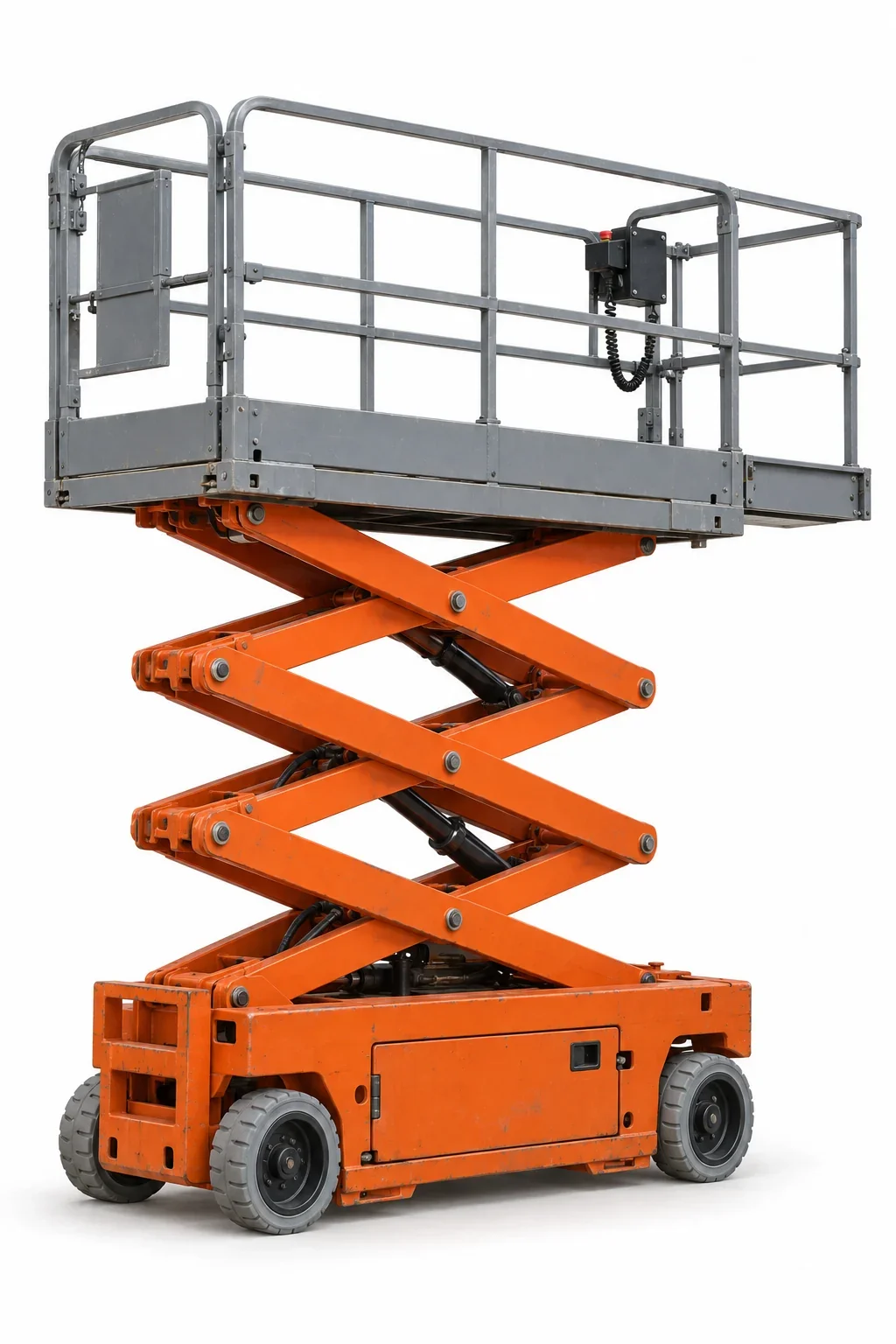
- Reach geometry: If the task is straight overhead—cladding, glazing support, or exterior MEP—scissors provide stable vertical access. If you need to reach over obstacles, consider booms instead.
Jacksonville factors that nudge the spec
- Sandy “Type C” soils are common. Machines with aggressive tread and wider stance are frequently used to maintain stability across unfinished grades.
- Coastal humidity and salt air can influence maintenance intervals and component selection. Simpler diesel or hybrid packages are often planned for long outdoor duty cycles.
Where rough-terrain scissor lifts fit locally
- Stadium-area renovations, façade work at commercial sites, and utility chases along service yards
- Shell construction where the slab is not placed yet
- Wide-deck tasks that benefit from more tools and materials at platform height
When a boom lift is a better match
If the work sits beyond landscaping, seating, or structural projections, a scissor’s vertical path may not reach efficiently. Articulating booms handle up-and-over geometry, while telescopic booms extend long, straight reach across open yards. Compare options at /boom-lift-rental/.
Related comparisons
- Indoor slab alternatives: /electric-scissor-lift-rental/
- All aerial categories: /aerial-lift-rental/
Actual site conditions, the selected unit’s instructions, and jobsite procedures govern exterior and elevated work.