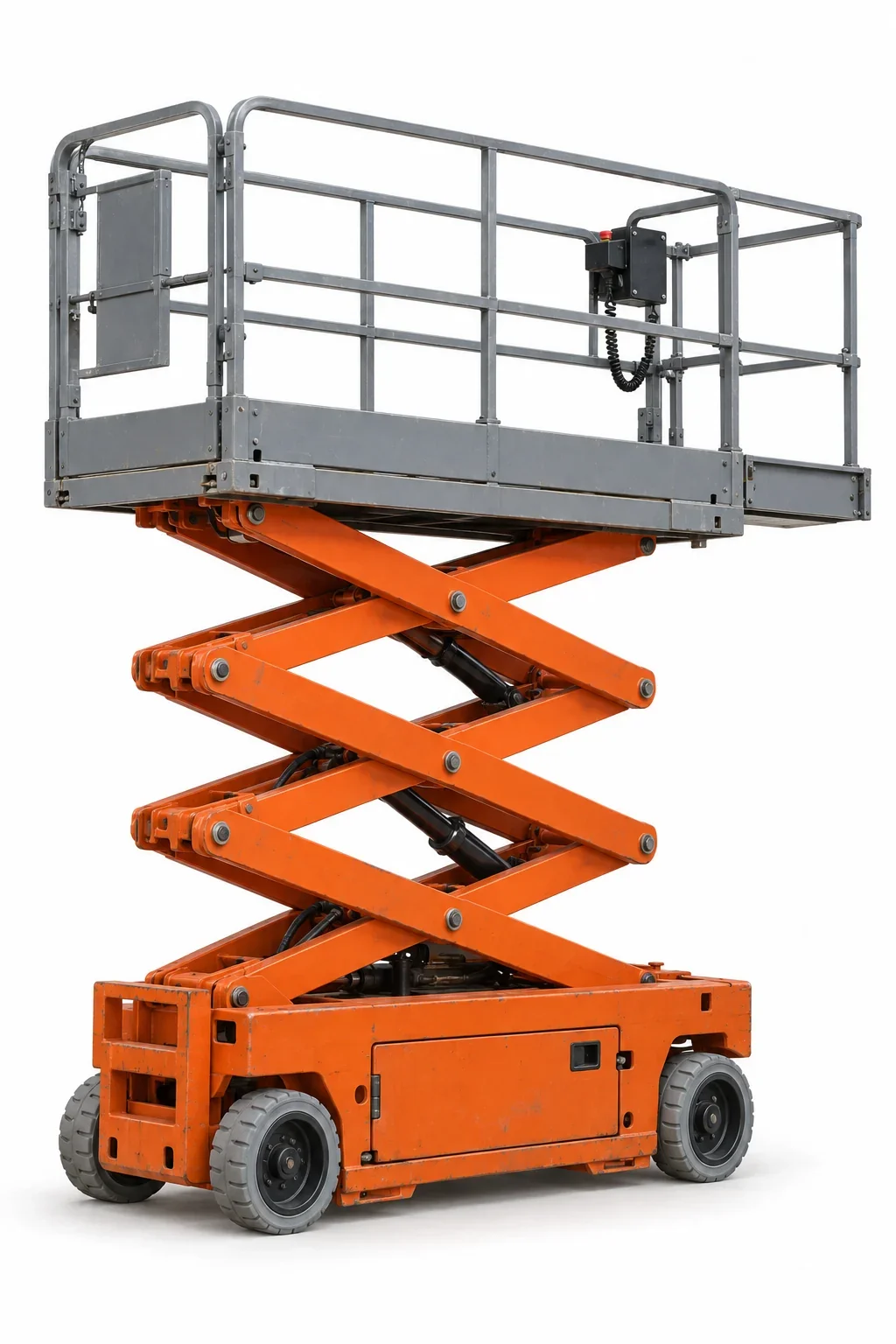
Geometry comes first: height, width, and turning
- Platform height is set by the highest task point at ceiling or rack level.
- Machine width must clear aisles, mezzanine gates, and doorways.
- Turning radius at the end of aisles can be as limiting as the aisle itself.
In regional logistics sites, narrow-aisle travel favors compact frames with precise drive controls. Battery-electric units also help maintain indoor air quality around packaged goods and equipment.
Local conditions that affect indoor choices
- Humidity and salt air: Coastal exposure can reach interiors in open-bay buildings. Models with protected electrics and corrosion-resistant finishes are often preferred planning options.
- Floor finish: Many local facilities use high-gloss slab finishes. Non-marking tires and gentle steering geometry reduce scuffing and surface wear.
Typical Jacksonville tasks for electric slab lifts
- High-bay lighting, HVAC sensor work, and inventory signage
- Racking adds, conveyor mezzanines, and IT cabling at elevation
- Maintenance in healthcare and event interiors where noise and emissions must stay low
When an electric scissor isn’t enough
If the task sits offset—over machinery, conveyors, or seating—vertical-only travel creates inefficiency. Articulating booms provide up-and-over reach, while vertical mast lifts reduce footprint further for extreme aisle constraints. See /aerial-lift-rental/ for a full comparison.
Related options
- Outdoor work on sandy sites: /rough-terrain-scissor-lift-rental/
- Broader aerial choices: /aerial-lift-rental/
- Boom reach needs: /boom-lift-rental/
- Ultra-compact vertical access: /vertical-mast-lift-rental/
Actual site conditions, the selected unit’s instructions, and facility procedures govern all elevated work.